Carnivorous Capitalism: Livestock Animals as “Population”
Eating is one of the most intimate interfaces between ecosystems and human societies. As heterotrophs—beings who obtain their energy by the consumption of other organisms—we must produce or procure our own food. In An Essay on the Principle of Population (1798), Thomas Robert Malthus (1766–1834) made this “difficulty of subsistence” one of his fixed laws of nature. Yet Malthus regarded the availability of arable land and the variability in soil fertility as the sole constraints on agricultural output, a view that limited his understanding of food production. What Malthus failed to recognize is the extent to which agriculture is shaped by the mode of production, that is, the socially organized and dynamic processes through which goods are produced, distributed, and consumed. As feudalism gave way to capitalism, the mode of production went through various stages of complex transformation that are frequently rendered in shorthand as “revolutions.” Each element of the “Agricultural Revolution” profoundly impacted human and nonhuman communities, not to mention the environments they share. For instance, the removal of crops from their areas of endemism and their forced adaptation to new environments—where they were increasingly raised in monocultural systems—violently reversed the evolutionary tendency for biota to grow ever more distinct. The imposition of uniform fields was not merely an agronomic shift, but a necessary condition for the emergence of brutal, slave-based systems of commodity production. The addition to soils of large quantities of organic, and later, chemical fertilizers interrupted long-established crop rotation systems and fallowing practices that had rested land, allowing soil flora and fauna time to regenerate. Mechanization hastened labor’s exit from agriculture—a process Eric Hobsbawm (1994, 289) described as “the death of the peasantry”—and accelerated planetary urbanization. At the same time, advances in plant and animal breeding, from Mendelian science to genetic technologies, extended the process of industrialization to life itself. Evidently, while humans remain tied to other organisms for their food, how those foods are procured, produced, distributed, and consumed (even the definition of “food” itself!) has shifted very dramatically and with hugely consequential effects for the functioning of the Earth system.
A recent EAT-Lancet report (Rockström et al. 2025) highlights the fact that the global food system now exerts the greatest pressure on the Earth’s life-support system, driving the transgression of five out of nine “planetary boundaries” identified as critical for continued human flourishing on Earth. The same report highlights another well-known fact: while the planet’s population stands at 8.3 billion (the Earth housed approximately 800 million humans when Malthus first penned his thoughts on population), food production has kept pace with population growth. This does not mean that everyone on the planet has access to a square meal. On the contrary, one out of every twelve people globally is hungry, while one in eight lives with obesity (UN FAOSTAT 2025). Familiarity with these facts should not dull our senses to their significance. We live in a world of “stuffed” and “starved” bodies (Patel 2012), a calorie-centric expression of inequalities that cut across the fabric of planetary life.
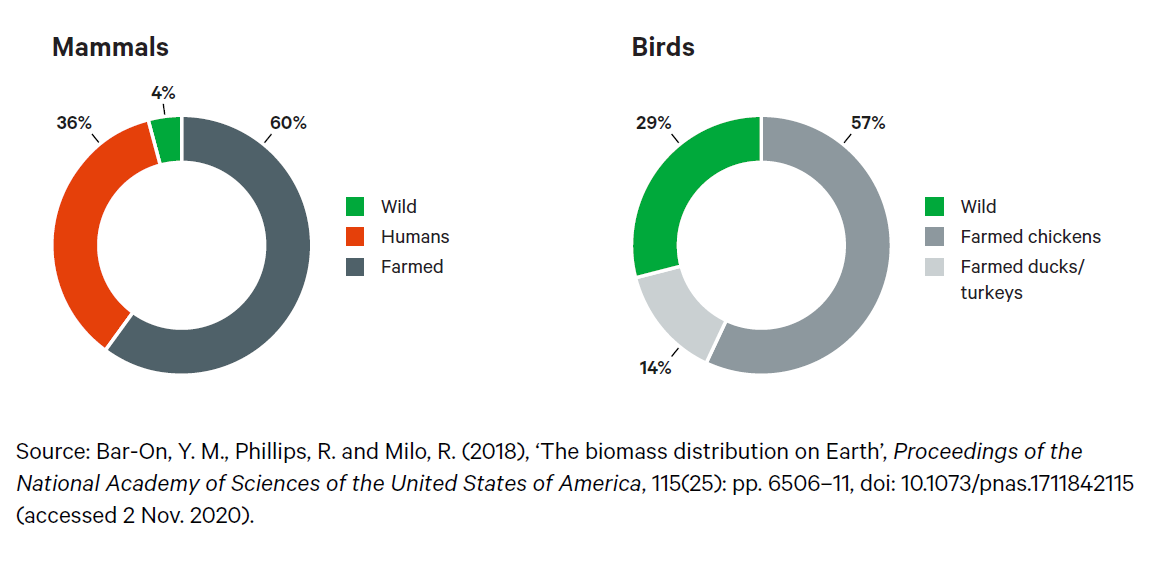
Figure 7.1. The global distribution of biomass across mammals and birds. (The figure does not show the distribution of global biomass—fish, invertebrates, amphibians, etc. are not accounted for).
This is very evident if we consider the farming of animals for human consumption. The global population of 8 billion humans is dwarfed by the 85 billion land animals slaughtered annually for human consumption (Orzechowski 2025; UN FAOSTAT 2023). Moreover, recent assessments of planetary biomass (Bar-On et al. 2018) found that humans and livestock now make up 96 percent of all mammalian biomass—36 percent and 60 percent, respectively—whereas wild terrestrial mammals constitute less than 4 percent (a more recent estimate by Greenspoon et al. 2023 puts the figure for wild land mammals at under 2 percent, rising to about 5 percent if we include wild marine biomass, as Jan Zalasiewicz and Julia Adeney Thomas discuss in their earlier essay). Farmed birds constitute approximately 71% of the world’s total avian biomass, with chickens alone accounting for more than half of this total. In contrast, wild birds comprise only 29% of global avian biomass (Fig. 7.1).
The environmental effects of what geographer Tony Weis (2013) terms “planetary meatification” are profound. All told, ruminant farming is the leading driver of global land-use change, and animal-sourced foods—including grains and oilseeds grown for feed—account for the majority of agricultural emissions. Moreover, the routine use of antibiotics as growth promoters in livestock has heightened the risk of antimicrobial resistance, while increased human-animal interactions have raised the likelihood of novel zoonotic diseases emerging. Underpinning all of this are the apparatuses of livestock production—the concentrated animal feeding operation (CAFO) and the industrial abattoir. These hypermodern technologies for “assembling” and “disassembling” meat ensure that the enormous psychological and physical cruelties inflicted on sentient beings are systematized and largely rendered invisible. “Geographically, slaughterhouses are cloistered,” writes feminist theorist Carol Adams (2010, 76). “We do not see or hear what transpires there.” The visual screening is deliberate, as is the packaging and marketing of meat: we are not meant to notice the cow in the rump steak, the hog in the pulled pork, or the chicken in the drumstick. Stripped of life and individuality, animal bodies are reduced to “meat on feet.”
The global-scale shift toward a protein-rich diet is unprecedented in its speed, magnitude, and ecological consequences, and it is driven less by the rise of aggregate human numbers than by the historically specific mode of livestock farming that has arisen under capitalism. Our task, then, is to understand the social forces and power structures that have assembled this deadly diet.
It is tempting to attribute the changes catalogued above as originating in the twentieth century’s “Great Acceleration,” the period roughly from the 1950s when the human population intensified its exploitation of planetary systems (McNeill and Engelke 2016). Certainly, meat eating “takes off” in the twentieth century—and in this sense, it is part of the larger process of industrializing diets—but the seeds of this dietary transformation were sown much earlier, when human populations began to regard nonhuman life as existing primarily to serve anthropogenic ends.
The domestication process is doubtlessly animportant inflection point in this story. The transition from foraging to food production fostered an interventionist paradigm in which organic life came to be understood as a malleable and exploitable resource. Political scientist James C. Scott (2017) pressed this line of thought when he posited a “thick” Anthropocene, stretching back some 12,000 years, in which farming communities engineered their environments to make them more conducive to intensive use. It is important to remember, however, that domestication was not a one-size-fits-all proposition, and while intensive modes of tillage farming and animal husbandry did develop, other communities adopted agricultural practices that demonstrated a careful partnership between people and their environment. Today, there are large numbers of smallholders, pastoralists, swidden growers, and forest-based agriculturalists who continue to uphold the tradition of conscious stewardship of the land. Thus, domestication cannot be understood in any simple sense as domination. There are, indeed, many ways to cultivate plants, raise animals, and build a domus (Angé and Nally 2026).
A more significant inflection point, however, was the emergence of mechanistic science in the sixteenth and seventeenth centuries. Combined with the rise of capitalism, it introduced a new way of understanding the natural world—one that cast matter as inert and passive while promoting new ideas about profit, productivity, and utility (Merchant 1980). The construction of wind and tidal mills, for instance, proved that nature’s elements could be captured and refined to serve new human purposes. The use of firewood and peat, and later coal, released humans from their dependence on “somatic energy” (human muscle and animal-draft power) and paved the way for an “exosomatic energy regime” that birthed industrial manufacturing (McNeill 2001). The theodolite, Gunter’s chain, and the cadastral map were some of the technologies used to subdue terrestrial space, reconstituting it as property to be managed and disposed of by a new class of landlords (Scott 1998). With the advent of the mechanical clock, time became an object of quantification and discipline, ushering in an industrial work regime that partitioned days into moments that were either productively “spent” or idly “wasted” (Thompson 1967). In the domain of farming, breeders sought to optimize the animal’s body, converting dairy cows into milking prodigies, sheep into efficient fabricators of high-value meat and wool, and hogs into superabundant producers of pork (Nally 2024). It is significant too that this period gave birth to the term “live-stock.” One of the earliest uses of this term is William Petty’s (1623–1687) posthumously published The Political Anatomy of Ireland (1691), where the compound noun denotes a being whose value is reduced to its market potential.
The mechanistic understanding of nature associated with the Enlightenment might have amounted to little more than a historical curiosity—a fleeting European turn toward intensified planetary exploitation—had it not been amplified and institutionalized through the process of colonization. In the New World, European colonists constructed roads, fences, dwellings, and towns, enclosing and dismantling the Indigenous commons and imposing a homogenized landscape shaped by the ideals of productivity and ownership. Europeans also brought with them animals, plants, and microbes that were to have fateful consequences for Indigenous peoples and their environments. Historian Elinor Melville (1994) has shown that the “ungulate irruptions”—in this case, sheep imported by Spanish colonists to highland central Mexico—precipitated extensive environmental changes and devastating waves of zoonotic infections. Across the Americas, European livestock (horses, cattle, sheep, goats, and pigs) reproduced quickly, and their collective actions—excessive grazing, trampling crops, consuming stored foods, disturbing wild game, and spreading Old World pathogens—amounted to what Allan Greer (2018, 263) terms a “multispecies assault on the native commons.”
Creating a landscape of cattle ranches and sheepwalks not only reduced Indigenous lands and peoples; it also created the “commodity frontiers” that supplied the Old World with the stores it needed to power its industrial revolution (Moore 2015). By the nineteenth century, improved ovine breeds were being shipped to New Zealand along with English pasture grasses; Aberdeen-Angus, Hereford, and Shorthorn cattle were exported to Argentina and the United States; and the Large White or “Yorkshire pig” was introduced to Ireland. In turn, each of these economies exported prodigious amounts of flesh: by the turn of the nineteenth century, 86 percent of Irish pork was shipped to British cities, and by 1930, virtually all of New Zealand’s mutton and more than 90 percent of Argentinian beef were destined for Britain (S.J. Connolly 2008, 360; Otter 2020, 226–36). The development of a vast, globally integrated regime of livestock production was the precondition for transforming diets, enabling meat, previously a relatively rare indulgence, to be reconstituted as the centerpiece of meals and a defining marker of civility itself (Otter 2014). This process has been aptly described by Chris Otter (2020) as a “large planet” philosophy whereby the Earth was reimagined as a vast agricultural estate to be intensively exploited for the benefit of imperial states.
Say’s Law, named after the French economist Jean-Baptiste Say (1767–1832), holds that supply creates its own demand, and the “meatification of diets” seems to illustrate this principle rather well. As the availability of meat increased and its cost decreased, dietary patterns shifted toward a greater emphasis on protein consumption. Nevertheless, until the twentieth century, meat remained largely inaccessible to the poor. This situation began to change when mechanistic science directed its attention to improving the physiology of livestock animals themselves. This dynamic reflects what Michael Watts (2004) describes as the enclosure of organic life “from within,” whereby scientists and breeders drew increasingly on the tools of modern biology—intervening at the molecular level, including the new ability to move genes across taxa—to produce novel forms of chicken, pigs, and cattle (Russell 2004). The natural rhythms of animal life, including breeding, birth, weaning, feeding, growth, and maturation, were now subject to scientific modification. The overall aim was to optimize the organism’s metabolic functions so that livestock animals could be converted into consumable flesh with greater efficiency (Landecker 2023). Just as machinery industrialized the farm, technoscience now turned to the animal body itself, reshaping and “enhancing” it in ways that blurred care, control, and exploitation (Fitzgerald 2008; Saraiva 2018).
Whereas evolutionary selection alters animal ontogeny over the course of generations, human-directed selection has thoroughly transformed the morphology of livestock in mere decades (Tallentire et al. 2016). This is dramatically illustrated in the transformation of the modern chicken or “broiler.” Until the twentieth century, chickens in the United States were kept largely for their eggs, rather than meat. Even after strong government promotion, annual per capita consumption of chicken meat there remained at around 30 pounds (about 13.6 kilograms) in 1960. The entry of large firms, such as Tyson and Perdue, and the development of marketing strategies to promote chicken as a healthy and diverse meat helped place chicken at the center of American plates. Thighs, wings, and breast meat replaced the whole dressed bird, and chicken nuggets, hot dogs, and meat patties appealed to consumers looking for a convenient “fast food” option (Horowitz 2004). Several innovations drove the biological intensification of chicken farming: the addition of vitamins D and B12 to stock feeds enabled chickens to be raised indoors without fatally compromising the health of the animal (Kirchhelle 2018). Developments in embryogenesis ensured a continuous supply of artificially incubated offspring (Boyd 2001). Rural electrification was the precondition for the development of a precisely controlled growing environment in which temperature, ventilation, and sanitation were minutely regulated, allowing chickens to be kept in large, densely packed flocks (Boyd 2001). Nutritionists worked out the precise ratios of vitamins, carbohydrates, and proteins needed to accelerate the chicken’s “feed conversion ratio”—in other words, the speed at which the chicken’s body can convert feed into flesh. The addition of antibiotics to stock feed, which reduced disease and had the unanticipated effect of improving the feed conversion ratio, was also a highly significant innovation (Kirchhelle 2018). Later genetic technologies (hybridization and transgenic techniques) were applied to turbocharge the process of biological intensification.
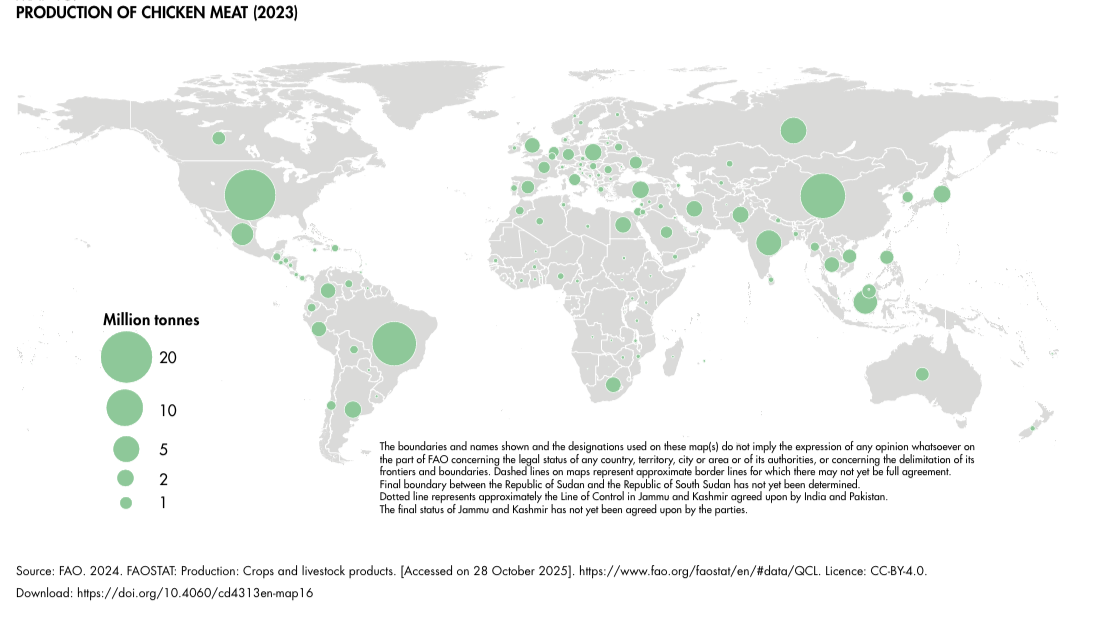
Figure 7.2. Production of Chicken Meat (2023).
All these technologies coalesced in the factory farm, or concentrated animal feeding operation (CAFO), whose architecture was designed to convert the chicken’s body into an “organic factory” (Finlay 2004; Nally 2011). Its sister institution, the industrial slaughterhouse, was designed to kill and “disassemble” animal bodies at the same ferocious pace as the CAFO manufactured meat. As Amy Fitzgerald (2010, 62) writes, “In the early 1970s, the fastest slaughtering lines killed 179 cattle per hour; today, the figure is around 400.” The figures for broilers are even more mind-boggling, with “throughput rates” that can be as high as 8,000 birds per hour, or more than two birds per second (Nielsen et al. 2019). The accelerated production of animal cadavers yielded a cornucopia of flesh for human consumption. By the 1990s, annual per capita consumption of chicken in America had more than doubled to 70 pounds (about 31.8 kilograms), and in 2024, it broke the 100-pound mark (about 45.4 kilograms) for the first time (Horowitz 2004; O’Keefe 2024). Gallus gallus domesticus is now the most populous bird on the planet, so numerous, in fact, that fossilized chicken bones are likely to leave a distinctive biostratigraphic signal in the Earth’s sedimentary record (Bennett et al. 2018; see Fig. 7.2).
The industrialization of broiler biology was replicated across the livestock sector, and a combination of tax incentives, lax environmental controls, and cheap labor has drawn the meat industry to the Global South. Today, the population of livestock animals on the planet is far greater than that of humans, and meat consumption is increasing at a faster pace than human population growth. Although the “protein bomb” is commonly presented as an inevitable development, it is in fact the outcome of social forces that have radically reshaped human production and consumption practices. A mechanistic philosophy of nature reimagined organic life as an inert “resource,” while a whole suite of processes—from colonial outsourcing to the internal enclosure of livestock bodies—were mobilized to convert domesticated zoomass into high-yielding producers of flesh, dairy, and eggs for human consumption.
If the Anthropocene marks the moment when the Earth’s metabolism is reorganized to meet the demands of economic growth, then planetary diets are best seen as the most intimate expression of this new and deadly power. The modern broiler is a technoscientific achievement—more an “artifact” or “machine” than a product of biological evolution. In this sense, it mirrors the biosphere itself, which has been dramatically reconfigured and intensively “harvested” for human purposes (Smil 2011). However, as we have seen, planetary meatification is a historically recent trend, and there are, of course, other options on the table. Homo sapiens need not be, to adopt Tim Flannery’s (2002) provocative terminology, “future eaters.” It is possible to replace greed with care and growth with restraint. Nonhuman animals might be afforded rights and treated with respect and dignity. Extractive capitalism can be replaced with systems of production that are ecologically regenerative and organized around collective well-being, rather than short-term profit. (See Schmelzer in this volume.) And we can look to other communities for models of an “interspecies etiquette” (von Essen and Redmalm 2023, 1265) that acknowledges the deep evolutionary ties that link all living beings.
Suffice it to say, agribusinesses will vigorously oppose such ideas and initiatives. Indeed, the industry is presently scaling up livestock production, with some estimates projecting global per capita meat consumption of 50 kilograms (about 110 pounds) per person per year by 2050, a shift that would drive the annual number of livestock animals slaughtered worldwide to a staggering 120 billion (Weis 2016). The geometric growth of livestock populations, occurring even as human population growth slows, suggests that agriculture is now driven primarily by market imperatives, rather than by demographic necessity. This orgy of production and consumption is likely to persist until carnivorous capitalism, along with its close cousin, carboniferous capitalism, is replaced by modes of organization that nourish the planet and all its inhabitants, human and nonhuman alike.