Is Trump Losing His Touch?
Is Trump losing his touch?
Picking a fight with a popular pope doesn’t seem like a smart move for an American president with approval ratings in the low 30s. Nor does doubling down with an AI-generated image of himself in the role of Jesus the healer.
Trump’s defense of the post—“I thought it was me as a doctor”—was dismissed as absurd by most commentators except for ultra-loyalist Franklin Graham. Graham not only accepted Trump’s explanation at face value but went so far as to play the old card blaming the incident on Trump’s critics: “I think his enemies are always foaming at the mouth at any possible opportunity to make him look bad.”
Even many of his staunchest evangelical and Catholic allies bristled at Trump’s blasphemy. But what about the image of the patient on whom Trump is supposed to be placing a healing hand?
If you are Donald Trump, the face of Jeffrey Epstein is surely the last one in the world you would want to see on that patient. The man on the bed may not be a dead-ringer for Epstein, but he does look like him, at least as much like Epstein as he does Jon Stewart (a resemblance Stewart himself has noted with comic horror on The Daily Show).
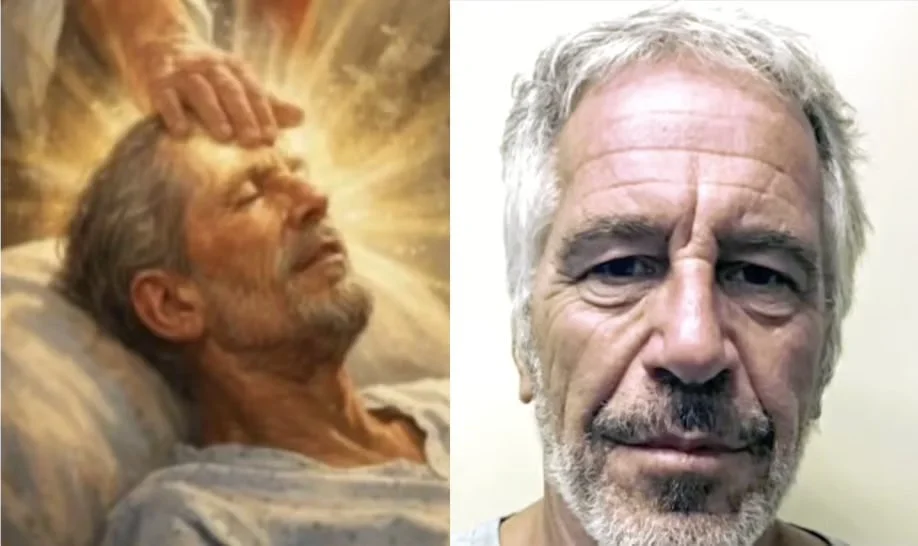
The blunder of having just this face in this image was not lost on the Iranians. Amid their waves of genAI Lego send-ups of Trump this month, and an AI-generated video of an avenging Jesus smiting him into the fires of hell, official Iranian channels have also now posed this simple question: “Is it Epstein being cared for”?
As I wrote in sections 2 and 3 of The Know-Nothing Campaign Against Higher Learning, Trump imported from the world of wrestling a brand of “kayfabe”—managed spectacle blending the real and the fake—that at times seemed to serve him well as a prophylactic against satire. But the act is finally wearing thin. His maladroit moves are now vulnerable to satirical exposure even by people not known to be adepts of the genre.