We’re pleased to share Prickly author James Chandler’s interview with historian Daniel Steinmetz-Jenkins about his recent pamphlet The Know-Nothing Campaign Against Higher Education in the upcoming issue of Commonweal Magazine.
The pamphlet, published in August 2026, takes stock of an American tradition of hostility to intellectual life since the 1850s and considers the limits of irony and satire in response to the attack on higher learning in America.
Check out the beginning of the Q&A below, and read the rest at Commonwealmagazine.org.
Daniel Steinmetz-Jenkins: The title of your book refers to the Know-Nothing movement of the 1850s. Can you explain some of its main features and how you connect them to Trumpism? How does this historical comparison offer insights that we might otherwise miss?
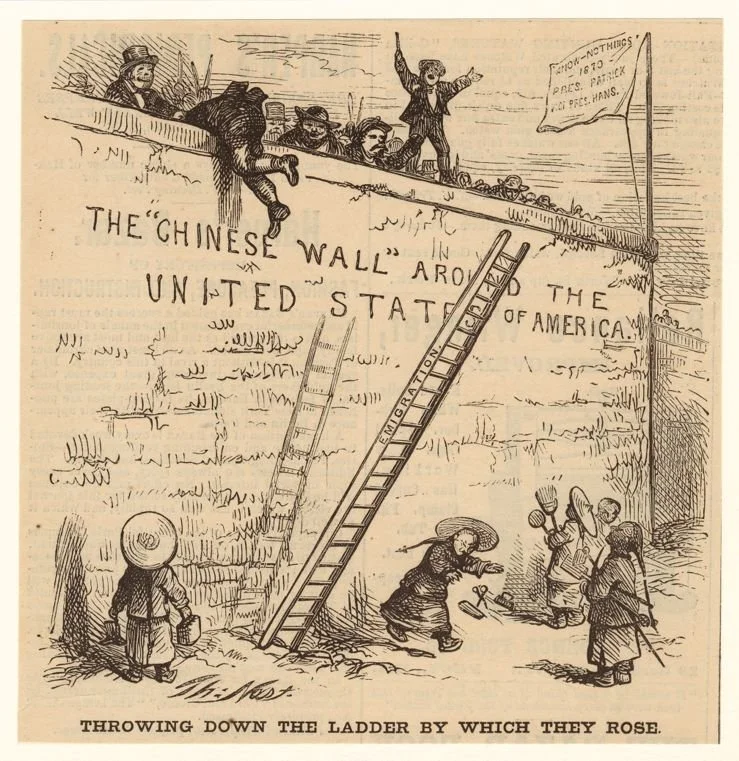
James Chandler: The Know-Nothing movement was short-lived but also pivotal because it effected the transition from the Whig Party to the Republican Party as we know it. It was a nativist or “America first” movement and immensely powerful for a short period. In the mid-1850s, 140 members had been elected to Congress and Know-Nothing mayors governed many major cities. It was an intensely anti-Catholic response to the surge in Irish and German emigration after 1845. Know-Nothings saw the Catholic Church as an internationalist threat to American sovereignty, and they fought ideological battles over curricular issues in schools. Though it wasn’t in the first instance anti-intellectual, the movement came to embrace the Know-Nothing label. When Steve Bannon refers to himself and his supporters as “Know-Nothing vulgarians,” he is using the label to merge his aggressive anti-elitism with anti-internationalism. The striking irony that Bannon—a descendent of Irish immigrants—and Trump—a descendent of German immigrants—should have teamed up to promote MAGA anti-immigration measures was anticipated by Thomas Nast in an 1871 cartoon: “Throwing Down the Ladders by which They Arose.” It showed a new Know-Nothing group, under the leadership of “Patrick” and “Hans” struggling atop a “wall of China” to keep out Chinese immigrants. There have been many discussions of Trumpism in relation to the Tea Party Movement, to McCarthyism, and to Fascist movements in Germany and America. American populism under Jackson in the 1830s is an even earlier precedent. But I think Bannon invoked the Know-Nothings for their special relevance to his cause.
DSJ: You present Trump as being something of a political tabula rasa until he meets Steven Bannon and David Bossie, who stamp their ideology onto him. Is that the right way to read your argument? Or, to put it another way, how much of what we now call Trumpism actually preceded Trump?
JC: “Political tabula rasa” might be a little too strong, but it seems clear that Trump had nothing close to a settled ideological agenda when he first met with Bannon and David Bossie in Trump Tower in 2012, nor perhaps for some time afterward. He was a real-estate magnate with a checkered history, the star of a reality TV show, and a man with a new penchant for generating false rumors about President Obama’s birth certificate—he was also someone badly wounded by Obama’s skewering of him at the National Press Club dinner. He had public appeal but no political orientation. He had changed party affiliation several times over the previous dozen years: from Republican to Democrat in 2001, from Democrat back to Republican in 2009 (right after Obama’s election), to “no party affiliation” in 2011, and then back to Republican in 2012. I think this was part of his attractiveness to Bannon and Bossie. After Bossie’s momentous win in the Citizen’s United decision, and Bannon’s subsequent taking of the helm at Breitbart News in the wake of its founder’s death in 2012, they weren’t looking for the kind of leadership that comes of a developed political outlook. They were looking for a malleable figurehead, and they found him in Donald Trump.
“They were looking for a malleable figurehead, and they found him in Donald Trump.”
DSJ: Tell us about the process by which Trump was won over to these ideas. You make a big deal, for instance, of Bannon’s 2015 Breitbart interviews with Trump, in which the two men do not always seem to be on the same ideological page.
JC: I do make a big deal about the 2015 interviews between Bannon and Trump, and I’m surprised they aren’t better known and more carefully studied. They mark the moment of Bannon’s reunion with Trump after Trump’s decision not to take on the incumbent Obama in 2012. Bannon and Bossie may have decided they had their man, but he himself wasn’t ready, or perhaps the moment wasn’t yet right. When that changed in 2015, Bannon saw his chance to offer Trump a mutually advantageous arrangement—a deal. Bannon would mobilize his passionate and disaffected constituents at Breitbart in support of Trump, and Trump would learn the codes that would make him appealing to that constituency.
“Bannon saw his chance to offer Trump a mutually advantageous arrangement—a deal. ”
Interviewing Trump in November, the very month when the MAGA slogan was launched, Bannon is a wheedling “Steve” putting words into the mouth of “Mr. Trump.” Sure, there was probably some level of prior agreement on some issues, especially in foreign policy. But in those interviews the two men express divergent views about, for example, immigration: Trump says he wants people to come in, but to come in the right way. Bannon, at this point declaring himself one of the “Know-Nothing vulgarians,” says he is more hostile to immigrants generally. And they seem very far apart, almost comically so, about intellectual elites in general and universities in particular. When Bannon bashes elites and intellectuals, “Mr. Trump” actually upbraids him with the reminder that he, Trump, is both an elite and an intellectual, someone who excelled academically (he did not) and continues to shine in all spheres of knowledge and intellect.
The next key moments in Bannon’s remaking of Trump came late in the 2015 election campaign. In August, Trump asked Bannon to take the place of Paul Manafort as his campaign manager, and by September Bannon had added Bossie to the team. But in early October came the crisis of the Access Hollywood tape. Now Bannon and Bossie had Trump where they wanted him, and his very next speech, delivered at Mar-a-Lago in mid-October, was a Nativist rant about the international threat to American sovereignty. Because Trump later distanced himself from Bannon, in part because Bannon began to tell this very story, it is easy to forget how important Bannon’s Know-Nothingism was to the making of MAGA as a political force over the last decade…
You can find the rest of the Q&A at Commonwealmagazine.org, and you can read and buy The Know-Nothing Campaign Against Higher Education on our website.
Last but not least, see our Pamphlet Forum, where we invite colleagues and critics to respond to our pamphlets.